Sierra Leone Farm Awarded Grant
POSTED ON Aug 20, 2010 / UPDATED ON Jan 27, 2011
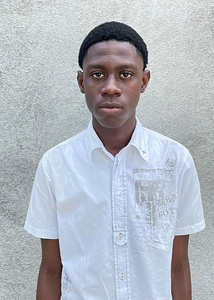
Hassan Marrah, who lives in COTN’s Banta Children’s Village, helps feed the goats and clean their pens each morning before school.
The swamp on COTN’s farm in Sierra Leone is being restructured for year-round rice crops.
With the help of a grant from the African Development Bank, COTN now has many goats and sheep on its farm in Sierra Leone.
COTN’s farm also has many piglets, which the children help care for.
A COTN–Sierra Leone security guard stands with one of the farm workers in front of the building where the pigs are kept.
Farm workers begin their day early on COTN’s farm in Sierra Leone, restructuring the swamp to enable year-round rice crops.
COTN Home Children Spengy Kabia and Kofi Nunoo help care for the pigs, which are kept in the building behind them.
Around 7 a.m. every school day, Spengy Kabia heads out to the Children of the Nations (COTN) Banta Farm with some of his brothers and sisters from COTN’s Banta Children’s Village in Sierra Leone. It’s about a five-minute walk from their houses on COTN’s property. There, Spengy does chores that rotate every few weeks—feeding the goats and pigs, cleaning out the stalls, caring for the garden, watering the plants, and pulling weeds. Though it’s early, Spengy doesn’t complain. The 14-year-old sees the benefit of learning how to keep up a farm. “I’m happy because it helps me,” he says. “Because when I grow up it will be part of me. I will know how to care for animals.”
The new chores at the COTN Children’s Village in Sierra Leone come with a new focus on the COTN farm. The goal is to make it the main source of food for the children in COTN’s homes and in the Village Partnership Programs, who are fed once a day during school. Right now, the food is purchased locally with the help of partner organization, Brighter Tomorrow for Africa, and provided by COTN's Feeding Department, which packages meals in the US to ship to our children. Though this source of food will continue to help the children, COTN–Sierra Leone leaders want the farm to be utilized to the fullest. “The goal is that the agriculture operations of COTN–Sierra Leone will be the backbone of COTN’s economy here,” says Reverend Angie Myles, COTN–Sierra Leone Country Director. “Most of our food is local food, so if we can improve the farm and make our own food, that will help us gain more stability.”
To make this happen, COTN–Sierra Leone staff members wrote a grant proposal asking for help to properly develop its farmland, which includes a swamp. The proposal was submitted to the African Development Bank, which works throughout Africa to help reduce poverty, improve living conditions, and mobilize resources for the continent’s economic and social development. The African Development Bank accepted the proposal and is now providing help through the Ministry of Agriculture in Sierra Leone. “They’ve given us goats, sheep, chickens. It’s all to help our efforts for food security since we have 100 kids in our care and we feed the Village Partnership Program children,” says Rev. Angie.
Currently, the main focus is restructuring the swamp area, which sits at the edge of the farm. By improving the ability to control the flow of water through the swamp, COTN can ensure its fertility all year round. With that accomplished, the farm should be able to produce crops of rice every three months—which, in turn, will allow COTN to better provide for the children in its care. Overseeing this undertaking is an agriculturalist who has been assigned to COTN by the Ministry of Agriculture, which is also funding the salaries of about twenty workers on the farm to make the transformation possible. “I’m pretty excited about what is happening with the farm,” Rev. Angie says. “There is hope.”
Hope is empowering many on the COTN–Sierra Leone staff to get involved and take ownership of the farm. Uncle Thollie, House Father at the Children’s Village, has organized the morning farm chores for the children. The COTN school principals and teachers made the agriculture class hands-on at the farm last year, teaching the children to weed, care for the land, and plant a crop of ground nuts. Even a special farm committee has formed to ensure the transformation happens. Though it will take time, staff and children in Sierra Leone are excited to watch and see how this reorganization will help better provide for the children in Banta. With a farm able to provide much of the food, more children will be able to join COTN’s program and have a better future.
If you'd like to support the farm in Sierra Leone, please visit our Giving Opportunities page.